How to Set Up an Egg Tray Manufacturing Plant?
Setting up an egg tray manufacturing plant can turn waste paper into a marketable packaging product with a relatively simple production process. However, choosing the right capacity, drying system, and equipment configuration is essential before investing in an egg tray production line.
This guide explains the main steps, equipment, production capacity, and key factors to consider when starting an egg tray manufacturing plant.
Secure a Reliable Supply of Waste Paper
The first step is to identify a stable source of raw materials. An egg tray production line can use various types of waste paper, including:
- Waste newspapers
- Cardboard boxes
- Used books
- Waste paper
- Recycled egg trays
These materials are processed into pulp and then molded into egg trays. A stable local supply of waste paper can help control production costs and keep the plant running consistently.
Choose the Right Egg Tray Production Capacity
Production capacity should match your local market demand, raw material supply, available investment, and factory space.
An egg tray manufacturing plant can be configured for approximately 1,000–7,000 pieces per hour. Different molding machines are available for different production requirements, including single-sided, four-sided, and eight-sided models.
For a new project, it is better to select capacity based on actual demand rather than simply choosing the largest machine. A properly matched Линия по производству яичных лотков can leave room for future expansion while avoiding unnecessary initial investment.
Select the Main Equipment
A complete egg tray production line normally includes several stages:
Waste Paper → Pulping → Pulp Conditioning → Egg Tray Molding → Drying → Hot Pressing → Stacking → Packing
Hydraulic Pulping Machine
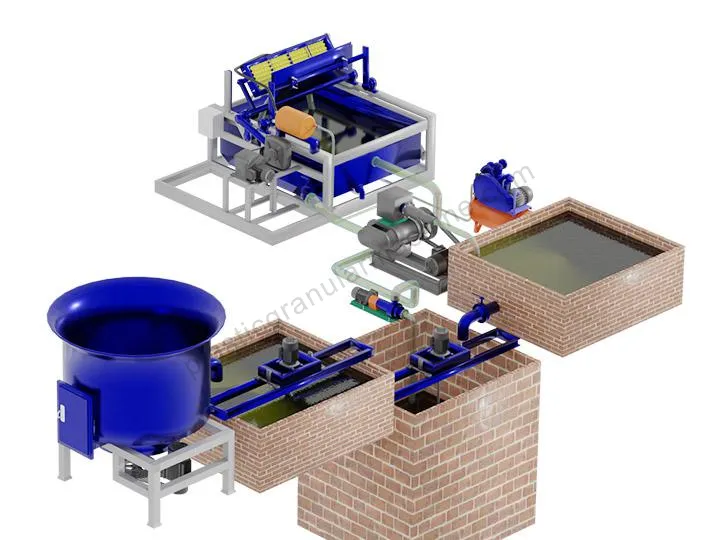
Waste paper is mixed with water and processed in a hydraulic pulper to produce pulp. The pulp is then transferred to a conditioning tank, where additives can be introduced, and the pulp is continuously stirred.
The pulp is diluted to an appropriate concentration before being supplied to the molding machine.
Egg Tray Molding Machine
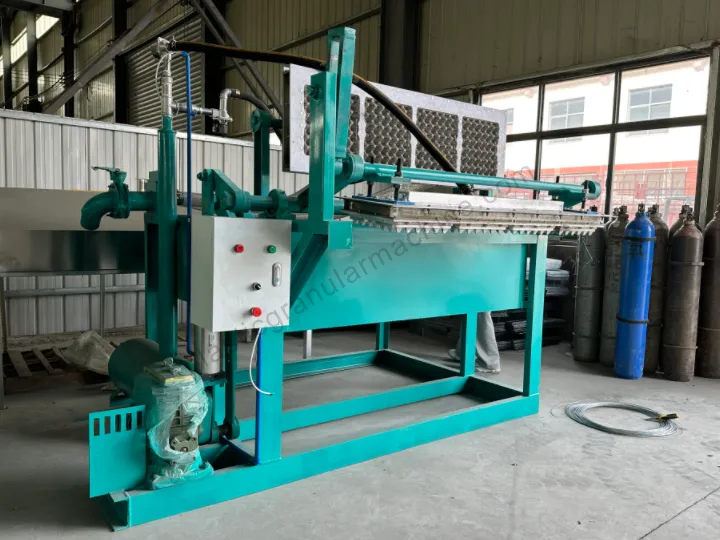
The egg tray molding machine is the core equipment of the plant. A vacuum system draws the pulp onto the mold, while excess water passes through a stainless-steel mesh and returns to the water pool for reuse.
After vacuum dewatering, the wet egg tray is formed and transferred to the next stage.
Egg Tray Drying System
Freshly molded egg trays contain considerable moisture and must be dried before they can be packed and sold.
The appropriate drying method depends on the local climate, available space, production capacity, and investment budget. Options include natural/manual drying, drying ovens, multi-layer metal dryers, and civil engineering drying systems.
For customers in hot and dry climates, natural drying may be considered. For larger-scale production or locations with less favorable weather, a mechanical drying system can provide more consistent production.
Hot Pressing, Stacking and Packing
Hot pressing can improve the strength and appearance of finished egg trays. After pressing, a stacking machine can arrange the trays for easier counting and handling, while a baler can compress and package the finished products for transportation and storage.
4. Plan the Factory According to the Production Process
Before purchasing equipment, the plant layout should be planned around the material flow.
The raw-material area should be close to the pulping section. Pulp should then move efficiently toward molding and drying, followed by hot pressing, stacking, and packing.
A well-planned layout can reduce unnecessary material handling and make equipment operation and maintenance easier.
The required factory space depends on the selected capacity, equipment configuration, drying method, raw material storage, and finished-product storage. Therefore, the layout should be designed after the production line configuration is determined.
5. Consider Automation and Labor Requirements
An egg tray manufacturing plant can use automatic or semi-automatic equipment depending on the customer’s budget and production requirements.
For a small or developing project, a semi-automatic configuration may provide a lower initial investment. A higher-capacity plant can use more automated equipment to reduce manual handling and improve production efficiency.
The best configuration is not necessarily the most automated one. It should match the customer’s expected production volume, labor availability, and future expansion plans.
6. Calculate the Total Investment
The cost of an egg tray manufacturing plant depends on several factors rather than one fixed machine price.
Important cost factors include:
- Производственная мощность
- Molding machine model
- Метод сушки
- Уровень автоматизации
- Number of auxiliary machines
- Factory preparation
- Installation and commissioning
- Local electricity and labor costs
- Waste paper prices
- Packaging and transportation
For this reason, an egg tray machine price should be evaluated together with the complete production configuration. A lower equipment price does not always mean a lower overall production cost.
7. Choose a Suitable Egg Tray Production Line Supplier
Before purchasing an egg tray production line, check whether the supplier can provide more than individual machines.
A reliable supplier should be able to help with:
- Production capacity selection
- Equipment configuration
- Factory layout planning
- Installation guidance
- Machine operation guidance
- Spare parts support
- After-sales service
For international projects, these services can be particularly important because the production line often needs to be adapted to the customer’s local climate, site conditions, and production requirements.
8. Start with a Customized Production Plan
There is no single configuration suitable for every завод по производству яичных лотков. A project in a hot, dry region may use a different drying solution from one in a humid or rainy climate. Likewise, a small startup and a large commercial producer may require completely different production capacities.
Therefore, before ordering an egg tray production line, determine your expected output, waste paper supply, factory conditions, drying requirements, and target products.
With the right combination of equipment and process design, waste paper can be efficiently converted into egg trays and other molded paper products, including apple trays, shoe trays, and cup trays.