Rubber Powder vs Rubber Granules: Applications Guide
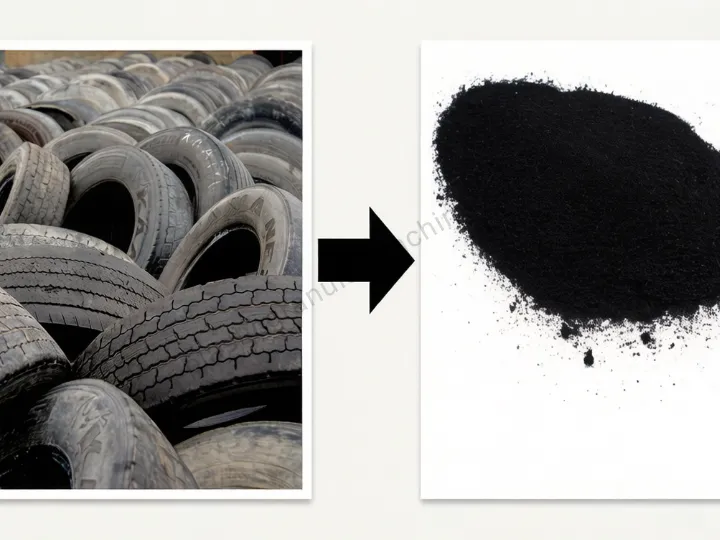
Understanding the distinction between rubber powder and rubber granules helps manufacturers, contractors, and recycling businesses select the right material for their specific applications. While both products originate from recycled tires, their physical characteristics and end uses differ significantly. This comprehensive guide explores these differences and provides practical guidance for choosing between these valuable recycled rubber products.
What Are Rubber Granules?
Rubber granules represent the intermediate product in tire recycling, typically measuring between 1 and 5 millimeters in particle size. These coarse particles retain much of the original tire rubber’s elasticity and durability while offering sufficient surface area for various binding applications. The production process involves primary grinding of shredded tire chips, followed by magnetic separation to remove steel content.
The irregular shape of rubber granules creates excellent interlocking properties when compressed or bound with adhesives. This characteristic makes granules particularly suitable for applications requiring cushioning, impact absorption, and dimensional stability. The larger particle size also facilitates easier handling and spreading compared to finer materials.
Color options for rubber granules have expanded significantly in recent years. While traditional black granules remain popular for many applications, manufacturers now offer products in various colors including green, red, blue, and earth tones. These colored options serve both aesthetic and functional purposes in landscaping and recreational surface applications.
What Is Rubber Powder?
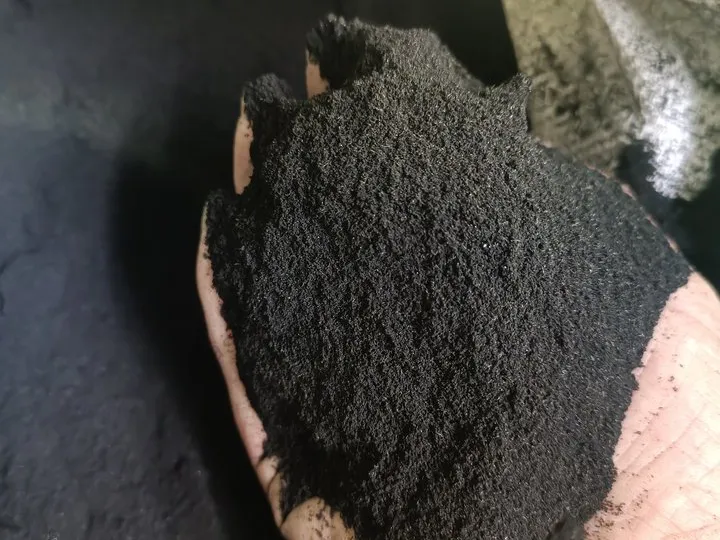
Rubber powder represents the finest grade of recycled tire rubber, with particle sizes ranging from 10 to 40 mesh (0.4 to 2.0 millimeters). This fine consistency results from secondary grinding of rubber granules, often followed by additional classification and fiber separation processes. The powder form maximizes surface area and enables intimate mixing with other materials.
The production of high-quality rubber powder requires sophisticated equipment including fine grinding mills, air separation systems, and precise screening technology. Advanced rubber recycling plants achieve consistent particle size distribution essential for demanding industrial applications. Fiber content must be reduced to minimal levels, typically below 0.5%, to meet specification requirements.
Rubber powder exhibits different handling characteristics compared to granules. The fine material flows more like a powder than a granular solid, requiring specialized conveying and storage systems. Dust control measures become particularly important when handling rubber powder to maintain workplace safety and product quality.
Key Physical Differences
| Property | Rubber Granules | Rubber Powder |
|---|---|---|
| Particle Size | 1-5 mm | 0.4-2.0 mm (10-40 mesh) |
| Surface Area | Moderate | High |
| Bulk Density | 450-550 kg/m³ | 350-450 kg/m³ |
| Flow Characteristics | Free-flowing | Powder-like |
| Typical Applications | Surfaces, infill | Modification, molding |
Applications for Rubber Granules
Athletic and Playground Surfaces
Sports facilities and playgrounds represent the largest market for rubber granules. The cushioning properties of bound rubber granule surfaces reduce impact forces during falls, making them ideal for children’s play areas. These surfaces also provide excellent drainage and remain usable in wet conditions.
Running tracks constructed with polyurethane-bound rubber granules offer consistent performance characteristics across varying weather conditions. The elastic response of these surfaces reduces athlete fatigue and injury risk compared to harder alternatives. Track surfaces typically use 1-3mm granules for optimal performance.
Artificial Turf Infill
Synthetic grass installations use rubber granules as infill material to support grass fibers and provide cushioning. The granules help synthetic turf systems mimic the play characteristics of natural grass while improving durability and reducing maintenance requirements. Infill depth typically ranges from 20 to 40 millimeters depending on application intensity.
Equestrian surfaces also benefit from rubber granule applications. Arena footing mixtures incorporating rubber provide appropriate cushioning for horse joints while maintaining sufficient support for various riding disciplines. The drainage properties of rubber-infused surfaces prove particularly valuable in outdoor arena installations.
Landscaping and Mulch
Colored rubber granules serve as decorative mulch in landscaping applications. Unlike organic mulches, rubber mulch does not decompose, eliminating the need for annual replacement. The material also suppresses weed growth effectively and maintains its appearance for many years.
Safety surfacing under playground equipment often uses loose rubber granules rather than bound surfaces. This application provides maximum impact absorption while allowing for easy maintenance and leveling. The loose material can be raked and redistributed as needed to maintain consistent depth.
Applications for Rubber Powder
Asphalt Modification
Rubber-modified asphalt represents one of the largest industrial applications for fine rubber powder. When incorporated into asphalt binders at 15-20% by weight, rubber powder improves pavement performance significantly. The modified material exhibits enhanced elasticity, reduced temperature susceptibility, and improved resistance to cracking and rutting.
Highway departments and municipal road authorities increasingly specify rubber-modified asphalt for high-traffic applications. The technology, often called asphalt rubber or crumb rubber modifier (CRM), extends pavement service life while providing an environmentally beneficial outlet for waste tires. Application rates typically range from 10 to 20 kilograms of rubber powder per ton of asphalt binder.
Molded Rubber Products
Rubber powder serves as a filler and reinforcing agent in molded rubber products. The fine particles integrate well with virgin rubber compounds, reducing material costs while maintaining acceptable product properties. Common applications include floor mats, wheel chocks, parking stops, and various industrial rubber goods.
Compression molding and injection molding processes both accommodate rubber powder additions. The powder content in molded products typically ranges from 10% to 50% depending on performance requirements. Higher powder contents work well for non-critical applications where cost reduction takes priority over maximum performance.
Adhesives and Sealants
The adhesive industry incorporates rubber powder into various products to modify elasticity and improve durability. Construction adhesives, flooring adhesives, and sealant formulations all benefit from rubber powder additions. The material improves flexibility, impact resistance, and adhesion to difficult substrates.
Rubber powder also finds use in waterproofing membranes and roofing materials. The elastic properties help these products accommodate building movement and thermal expansion without cracking. Fine particle size ensures uniform distribution throughout the matrix material.
Polymer Blends and Composites
Plastic and rubber compounders use rubber powder as a modifier for thermoplastic materials. Polypropylene, polyethylene, and PVC compounds incorporating rubber powder exhibit improved impact resistance and flexibility. These modified materials serve automotive, construction, and consumer product applications.
Thermoset composite materials also incorporate rubber powder to modify fracture toughness and reduce brittleness. The rubber particles act as crack arresters, improving durability in demanding structural applications. Composite manufacturers appreciate the cost reduction rubber powder provides compared to virgin polymer modifiers.
Choosing Between Granules and Powder
Selecting the appropriate recycled rubber product requires careful consideration of application requirements, processing capabilities, and economic factors. Surface applications requiring cushioning and drainage typically favor rubber granules, while modification and molding applications require the finer consistency of rubber powder.
Processing equipment capabilities also influence product selection. Facilities equipped with tire recycling production lines capable of fine grinding can produce both materials, offering flexibility to serve multiple markets. Operations limited to primary grinding focus on granule production for surface applications.
Market demand and pricing in your region should guide production decisions. Some markets show strong demand for both products, while others favor one material type. Understanding local applications and customer requirements helps optimize product mix and maximize revenue.
Quality Considerations
Regardless of particle size, recycled rubber product quality depends on several factors. Metal content must be reduced to minimal levels through effective magnetic separation. Fiber contamination affects performance in many applications, requiring thorough separation processing. Consistent particle size distribution ensures predictable performance in customer applications.
Quality testing protocols should include metal detection, fiber content analysis, and particle size distribution measurement. Documented quality assurance provides customers confidence in product consistency and supports premium pricing for high-quality materials.
Equipment for Producing Both Products
Modern tire recycling equipment can produce both rubber granules and rubber powder through appropriate configuration. Primary shredding and grinding stages create granules, while secondary fine grinding with air classification systems produces powder. Magnetic separators and fiber removal equipment ensure product quality regardless of particle size.
Contact Shuliy Machinery to discuss your rubber recycling requirements. Our engineering team designs systems configured for your target products and production volumes, whether you focus on granules, powder, or both materials.
Frequently Asked Questions
Which is more profitable to produce, rubber granules or rubber powder?
Rubber powder typically commands higher prices per ton due to more stringent quality requirements and additional processing. However, granule production offers higher throughput with simpler equipment. Profitability depends on your equipment capabilities, local market demand, and production costs.
Can I produce both rubber granules and powder with the same equipment?
Yes, complete tire recycling lines can produce both products. The system produces granules through primary grinding, then processes a portion through secondary fine grinding to create powder. Equipment configuration determines the product mix and production capacity for each material.
What mesh size is considered rubber powder?
Rubber powder typically refers to material passing through 10-40 mesh screens, with particle sizes between 0.4 and 2.0 millimeters. Finer grades including 60 mesh and 80 mesh exist for specialized applications requiring maximum surface area.
Do rubber granules and powder have different storage requirements?
Yes, rubber powder requires dust collection systems and careful handling to prevent airborne particles. Granules flow freely and handle more easily. Both materials should be stored in covered areas protected from moisture and direct sunlight.
Which applications cannot use rubber granules instead of powder?
Applications requiring intimate mixing with other materials, such as asphalt modification and polymer blending, require rubber powder. The fine particle size ensures uniform distribution. Surface applications like playgrounds and turf infill specifically require the larger granule size for proper performance.